Your complete guide to finding the perfect place to call home.
Why Researching Your Neighborhood Matters
Your neighborhood shapes every aspect of daily life—from safety and convenience to community connections and overall well-being. The right location impacts your happiness, financial stability, and lifestyle satisfaction for years to come.
Consider Little Italy in San Diego: this vibrant, walkable district offers incredible dining and culture, but with only 33% homeownership, it reflects a transient rental community. Understanding these dynamics helps you make informed decisions aligned with your goals.
Step 1: Define Your Priorities
Safety First
Crime rates and neighborhood security
Schools
Quality education for your family
Affordability
Budget and cost of living
Commute
Distance to work and transit access
Amenities
Shopping, dining, and entertainment
Example: Westwood, San Diego features top-rated schools and a family-friendly atmosphere, making it ideal for parents prioritizing education. Create your list of must-haves versus nice-to-haves before diving into research—this clarity will guide your entire search process.
Step 2: Use Online Tools & Data
Essential Research Platforms
Walk Score: Evaluate walkability, transit access, and bike-friendliness in any area
Neighborhood Statistics: Review income levels, age demographics, and homeownership rates
Crime Maps: Analyze safety trends and incident reports over time
School Ratings: Compare test scores, reviews, and educational quality
Seattle’s comprehensive neighborhood guides showcase how Walk Score data reveals transportation convenience—a critical factor for daily life quality.
Pro Tip
Cross-reference multiple data sources for accuracy. A single metric doesn’t tell the full story—combine crime statistics, demographic data, and community reviews for a complete picture of any neighborhood.
Step 3: Explore Community Vibes & Culture
Join Local Platforms
Create accounts on Nextdoor and neighborhood-specific Facebook groups to access real-time community discussions.
Read Conversations
Observe how residents interact—friendly, supportive communities stand out through helpful exchanges and event coordination.
Assess Engagement
Active communities with regular posts about local events, safety updates, and recommendations indicate strong neighborhood bonds.
Kensington, San Diego earned a 99 friendliness rating thanks to its welcoming residents and historic charm. These intangible qualities often matter most for long-term satisfaction.
Step 4: Visit the Neighborhood In Person
Strategic Exploration
Timing matters: Visit during weekday mornings, evenings, and weekends to experience different rhythms. Morning reveals commute patterns, evenings show community activity, and weekends display recreational life.
What to observe: Note the condition of homes and landscaping, diversity of local businesses, availability of parks and green spaces, and public transportation accessibility.
Talk to locals: Strike up conversations at coffee shops or parks. Residents offer honest insights about noise levels, parking challenges, neighborhood changes, and hidden gems you won’t find online.
Step 5: Evaluate Practical Factors
Commute Analysis
Test your daily route during rush hour—add 20% buffer time for reality. Consider backup transportation options for flexibility.
School Quality
Beyond test scores, investigate teacher-student ratios, extracurricular programs, arts and sports offerings, and parent involvement levels.
Housing Market
Compare rent versus buy costs, review price trends over 3-5 years, and identify available housing types (apartments, townhomes, single-family homes).
Step 6: Consider Future Growth & Development
Neighborhood research checklist
Planned Projects
Research upcoming construction, new transit lines, and commercial developments
Zoning Changes
Check city planning documents for rezoning that could alter neighborhood character
Value Impact
Assess how growth affects property values and quality of life
Clairemont Madison in San Diego exemplifies mixed zoning—quiet residential streets coexist with commercial corridors. Understanding this balance helps predict future changes and whether they align with your preferences.
Step 7: Make an Informed Decision
Your Decision Framework
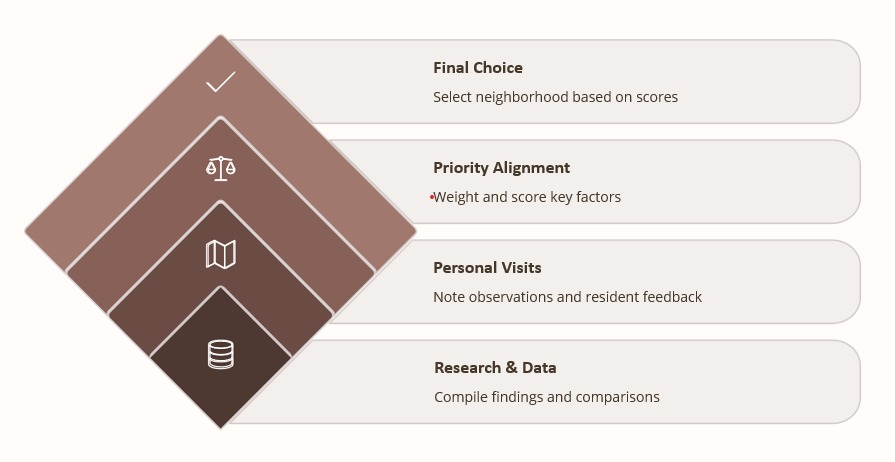
Compile your findings: Organize research, visit notes, and resident feedback into comparison sheets.
Score each factor: Weight priorities (safety 25%, schools 20%, etc.) and rate neighborhoods accordingly.
Trust your instincts: Data guides decisions, but gut feelings about community fit matter too.
Accept imperfection: No neighborhood checks every box—focus on alignment with your top priorities.
The best neighborhood fits your lifestyle and budget while offering room for growth.
Your Neighborhood, Your Life: Start Smart, Live Well
Research is Power
Thorough investigation leads to confident decisions and prevents costly mistakes that impact your happiness and financial well-being
Combine All Sources
Blend online data, community voices, and personal observations for the complete picture—each perspective reveals different truths
Take Action Today
Your ideal neighborhood awaits discovery—start researching, visiting, and connecting to find where you truly belong
Ready to Make Your Move?
Costa Removals Express covers all areas of London and Surrey, making your transition to your carefully researched neighborhood smooth and stress-free.
With professional service and local expertise, we help you settle into the perfect community you’ve worked so hard to find.